Refresh Your Outdoor Space Without a Major Renovation
You don't need a skip on the drive or a fortnight of builders traipsing through the house to make your garden feel new again. Most outdoor spaces lose their shine gradually: a bit of moss here, a faded fence panel there, pots that have gone leggy and bare, a corner that's quietly been collecting junk since last summer. A handful of focused weekend projects can undo most of that wear, and none of them need scaffolding or planning permission.
Start With the Surfaces You Walk On
Paving and patios take more punishment than almost anything else in a garden, yet they're often the last thing anyone thinks to clean. Rain, fallen leaves and general foot traffic leave a layer of algae and grime that dulls stone and makes it slippery underfoot, and that build-up gets worse every year it's left alone. A thorough clean with pressure washers can transform tired paving in an afternoon, lifting ground-in dirt from block paving, decking and patio slabs without scrubbing on your hands and knees. The right approach depends on what you're cleaning: a compact machine with a gentler touch suits decking and softer stone, while a larger driveway or heavily stained concrete can take a sturdier, higher-output machine without any risk of damage. Work in overlapping passes, keep the nozzle moving so you don't etch the surface, test an unobtrusive corner first if you're unsure how a material will react, and give the area a day to dry before deciding whether it needs re-sanding or sealing.
Cleaning the stone itself is only half the job, though. The grout lines between patio slabs often hold onto moss and black spot long after the surface looks fresh, simply because the texture that helps grout do its job also gives dirt somewhere to sit. Tackling grout specifically is its own task worth a closer look, with its own tools and timing, and it's easy to overlook once the main surface already looks clean. Spend a separate session on it once the main clean has dried, working along the lines instead of across them, and the whole patio will look newly laid, not simply rinsed off.
Give Fences and Furniture Some Attention
Before considering replacement fence panels, check whether a wash down and a coat of fence treatment will do the job. Most greying is caused by UV exposure and general weathering on the surface of the wood, not any structural problem underneath. Timber fencing really only needs replacing when posts have rotted at the base or panels have genuinely come apart; surface greying is almost always cosmetic and easy to put right with a stiff brush, a mild cleaning solution and a weatherproof stain or oil once everything is dry.
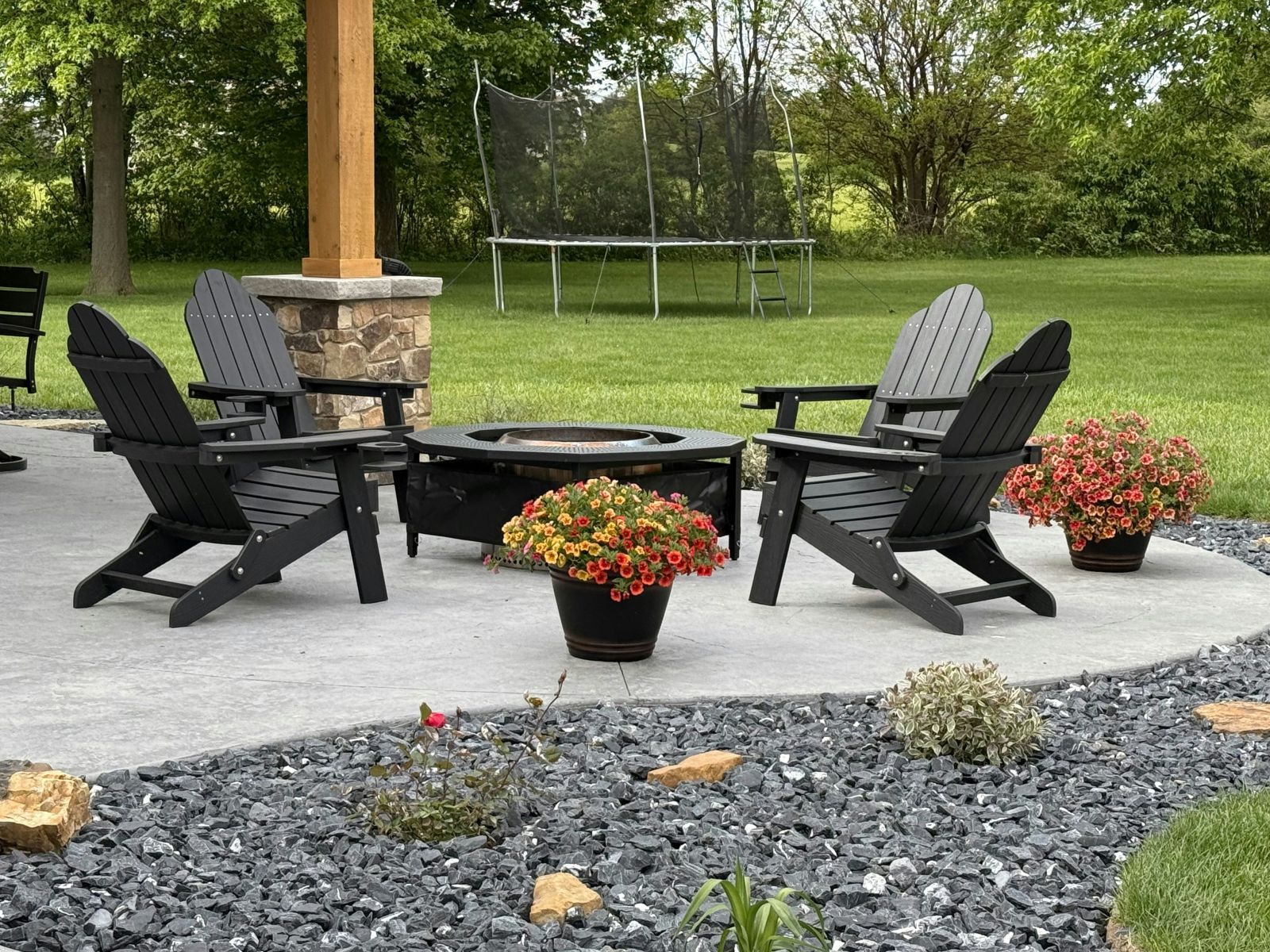
Wooden benches and tables can be sanded back lightly and re-oiled in an afternoon, bringing the grain and colour back without a full strip-down, while plastic and resin pieces usually come up well with warm water and a stiff brush, with a stronger degreaser for anything that's sat outside over winter. If cushions and parasols have faded, swapping covers is a cheap way to lift the whole seating area without buying new furniture, and it's often the single change that makes a tired patio set look new again.
Tidy and Replant Your Borders
Borders drift out of shape over a single growing season as some plants spread and others fade, and by midsummer it can be hard to remember what the bed was originally meant to look like. Set aside an afternoon to lift anything that's died back, divide perennials that have become congested, and cut a crisp edge along the lawn with a half-moon tool so the border reads as deliberate again. That edge alone does more for how tidy a garden looks than almost any other single job, because a sharp line reads as intentional even where the planting itself is a little wild. Gaps are easiest to fill with a few well-chosen shrubs or a run of bedding plants in a single colour. Mulching bare soil afterwards keeps weeds down, holds moisture through dry spells, and gives beds a finished look almost immediately, well before anything has had the chance to properly grow in.
Add Lighting and Small Features
Lighting changes how a garden is used as much as how it looks. Solar stake lights along a path or a few warm-white festoon lights strung across a seating area extend the hours you'll actually spend outside once the evenings draw in, and neither needs an electrician or any cabling through the house. Freestanding planters are another quick win: grouping two or three large pots by a doorway or at the end of a path draws the eye and can disguise an awkward corner that never quite worked, whether that's a bare patch of wall, an old drain cover or a gap left by a plant that didn't survive.
Keep Momentum With Small, Regular Jobs
These projects work best when they're followed up with light, regular maintenance. A quick sweep of paving after autumn leaf fall and a fence check before winter catch most problems early, long before small issues turn into bigger, more costly ones, and a spring tidy of borders finishes the cycle before the new growing season gets going properly.
A few weekends spent on these jobs will do more for how a garden feels than most full renovations, and at a fraction of the cost and disruption. Pick the area that bothers you most, tackle it properly, and let the rest follow in its own time. By the time you're finished, the garden will feel considered again, not simply tidied, and that's a difference visitors notice even if they couldn't say exactly why.